Best Summer Programs for High School Students: Social Justice & Activism

Best Summer Programs for High School Students: Social Justice & Activism

As part of your college application, extracurricular activities—including those over the summer— help demonstrate your intellectual curiosity and commitment to an area of study (typically, the one you might pursue in college).

But “programs” are not the only way to explore academic interests. You can join clubs at your school or locally, take free online classes via edX and Coursera, shadow, or intern (aka volunteer for most students)—there are tons of options ranging from super formal (and pricey) to those as simple as reading in your free time.

The following programs are some of our favorites for students interested in exploring social justice and activism.

Pen American Free Speech Advocacy Institute (Spring too!!!). PEN America’s Free Speech Advocacy Institute is a 15-week online education and training program that will provide students with a foundational understanding of free expression as a civil right and an ongoing contemporary topic of social and political conversation. Students will be introduced to a broad range of issues related to free expression at both the domestic and international levels, covering the First Amendment and free expression limitations established by the Supreme Court, as well as the history of free expression as a human right, and other modern issues related to the Internet, protest, political dissent, hate, and freedom of the press.

The ACLU National Advocacy Institute’s High School Program will convene a virtual gathering of high school students (ages 15-18) from across the United States to participate in a week-long learning experience for the next generation of social justice advocates.

The NYCLU has prioritized youth activism for more than 20 years. They work with youth organizers across New York State to ensure that young people know their rights, know how to access those rights and learn how to effectively organize around civil rights and civil liberties in their schools and communities. They are eager to organize alongside youth activists, educators and parents alike to effect change in New York. Check out these projects: Teen Activist Project & Student Ambassadors.

FFAC National High School Mentorship. Are you a high school student interested in working to create a more just and sustainable food system? Are you looking for a deeper understanding of social issues and your place as an advocate in the movement? Would you like to be part of a supportive community of like-minded changemakers? If so, consider applying to Factory Farming Awareness Coalition’s Student Advocates program. 

Religious Action Center Teen Justice Fellowship. RAC teen fellowship programs are learning intensives in community organizing, designed to equip our youth leaders with the skills to create change in their home communities. Through fellowships, high schoolers connect with other social justice leaders from across the country and learn lifelong skills applicable to any issue they are passionate about. The fellowships value experiential learning, moving beyond theory and Zoom trainings into action. Each fellowship culminates in teens designing and implementing a project in their home communities. As a fellow, you’ll learn community organizing skills, explore your own identity and what your sources of privilege and oppression are, the roots of voter suppression in America, skills to register voters, and complete a civic engagement project in your home community. You get to learn, decide how you want to make an impact, and be the leader that makes it happen.

*Stay in the know! Subscribe*

Summer 2022 & Pre-College Programs

Summer 2022 & Pre-College Programs

Summer program apps are opening up for summer 2022! 

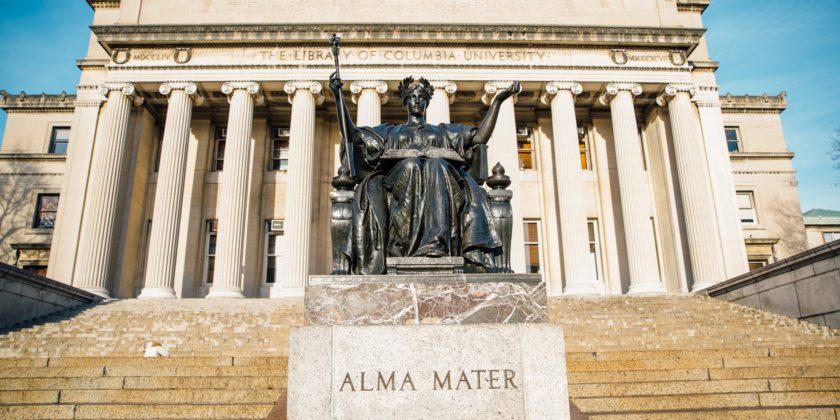
Did you know that Columbia’s largest high school program raked in $20 million during the pandemic? 

If you are targeting highly selective/highly rejective schools, we’ve noticed they’d rather see a rising senior undertake something a bit more self-directed. For underclassmen, sometimes paid programs are a good idea; it depends on the student and their goals. 

It can be hard to find summer programs, and CU’s programs—like Harvard, Georgetown, Penn, and Brown—always rank high in Google searches and have a vast array of curricular offerings, formats, and timelines. They simply just work for many families who can afford them because they are easy! But, easy is not always best…

Posting this article with the hope that folks will think beyond these programs, especially if they are rising seniors, or plan to target highly selective (top 30 or so) schools. There is more you can do, for less! 

But BMC, you’ve posted some of these programs in the past—what gives? Yes, we do post about paid summer programs but provide information on those that are free, low-cost, or those that offer substantial scholarships. For example (we will be updating these in the coming months, too!):

Best Summer Programs for High School Students: Computer Science

Best Summer Programs for High School Students: Leadership

Best Summer Programs for High School Students: Sports/Sport Management

Best Summer Programs for High School Students: Engineering

Best Summer Programs for High School Students: Business

Summer Programs for Female Identifying High School Students

Annual Camp Pride Summer Leadership Academy

Always an option, always free: Pursue a passion or purpose project. Create an independent study with your favorite teachers. Cold call/mail profs until you find your way into a lab. Max out edX and Coursera

There’s also no need to wait until summer to engage in and explore your interests. Start now!

*Stay in the know! Subscribe*


Bank of America Student Leaders – 2022

Bank of America Student Leaders – 2022

Summer program alert!

As a BOA Student Leader, you will participate in an eight-week paid internship at a local nonprofit organization where you will learn first-hand about the needs of your community and the critical role nonprofits play. In addition, you will learn valuable civic, social and business leadership skills. Each Student Leader will attend the Student Leaders Summit held in Washington, D.C. where you will learn how government, business and the nonprofit sector work together to address critical community needs. Note: in-person events will be in line with local and national guidelines around gatherings and travel and may be subject to change.

To become a Student Leader, you must:

  • Currently be a junior or senior in high school
  • Live in one of the eligible markets listed
  • Be able to participate in an 8‐week paid internship at a local nonprofit/charitable organization and work 35 hours a week*
  • Be legally authorized to work in the US without sponsorship through the end of September 2022
  • Be able to participate in a week‐long Student Leadership Summit in Washington, DC (July 25-30, 2022) (All expenses paid as part of Student Leaders. This week will be part of your 8‐ week experience.) *
  • Be a student in good standing at your school
  • Please note: Bank of America employees or members of their immediate family (e.g., children, siblings, grandchildren, nieces, nephews, etc.) are NOT eligible to apply.

*In-person events will be in line with local and national guidelines around gatherings and travel and may be subject to change.

Click here for FAQs on our Student Leaders program.

Applications for the 2022 program will be accepted from Monday, November 1 through Friday, January 28. Apply Now for the 2022 Student Leaders program.

 *Stay in the know! Subscribe*

Forté Fall Conferences

Forté Fall Conferences

Even in a pandemic, Forté’s mission of #MoreWomenLeading remains the same. Please join us in encouraging undergrad women to invest in their future selves by helping us spread the word about Forté’s upcoming virtual Fall College Conferences!

Forté Undergraduate Campus Leadership Summit
This is an opportunity for undergrad women to maximize their personal strengths and develop their unique leadership style. Open to sophomores, juniors, and seniors who are collegiate chapter student leaders, women in business club student leaders, and Forté Undergraduate Campus Ambassadors.

Sept. 30 – Oct. 1, 2021
Registration Deadline: Sept. 23

College Fast Track to Finance Conference
Open to sophomores and juniors of all majors interested in exploring the many career paths in finance. First-year students who are business majors or have previous experience and seniors that have not accepted full-time employment may also register.

Oct. 14-15, 2021
Registration Deadline: Oct. 1

Partners: PIMCO, Bank of America, Bloomberg, Credit Suisse, Deutsche Bank, Evercore, Greystar, Guggenheim Partners, Hines, J.P. Morgan, PNC, and Vanguard

Candid Conversations for Black, Latinx, and Native American Undergraduate Women Conference
Open to college women from historically underrepresented groups in business and diverse academic backgrounds — with a focus on the experiences of Black, Latinx, and Native American women.

Oct. 28-29, 2021
Registration Deadline: Oct. 15

Partners: PIMCO, Anheuser-Busch InBev, Bank of America, Bloomberg, Credit Suisse, DaVita, Deloitte, The Dow Chemical Company, Evercore, Hines, Liberty Mutual, UBS, and PNC

If you know a woman who would benefit from attending our virtual conferences, please send her this link: http://bit.ly/fortecc. You can also post the following on your social channels to help spread the word:

The business world needs more women leaders. Registration is now open for undergrad women to build leadership skills, expand their network, and develop their personal brand at Forté College Conferences this fall. Let’s get #MoreWomenLeading! http://bit.ly/fortecc.

Thank you for spreading the word about these events and Forté’s mission to get #MoreWomenLeading!

*Stay in the know! Subscribe*

The Best Summer Programs for High School Students

The Best Summer Programs for High School Students

Guess what? There is no such thing as a “best” summer program.

The best programs are the ones that help you explore your academic interests. As part of your college application, they help demonstrate your intellectual curiosity and commitment to an area of study (typically, the one you might pursue in college or at least indicate that you might pursue in college on your app).

That said, the best way to spend your summers, if you have these aims in mind, might not be a summer “program” at all. There are a few very competitive and highly-regarded summer programs for high school students, but most pre-college programs are not selective. In future posts, I will be sharing some of my favorite summer programs for students with specific academic interests (business, engineering, computer science, etc.) as well as some ways to explore interests that are not formal pre-college programs (for the most part, free options!). These other options will include activities that you can participate in all year, so if you want to get started now you can.

Stay tuned…and if you want an email alert when these lists are posted, please subscribe!

*Stay in the know! Subscribe*

February Action Plan – By Grade

February Action Plan – By Grade

Seniors:

  • Once your applications have been submitted, track the status of each app online to ensure all of your application materials were received. Follow up with your school counselor ASAP if a college is missing your transcript or a letter of recommendation. Check your junk email folder regularly (daily), so you do not miss correspondence from colleges.
  • Interviews! Sign up for interviews for all of your RD schools as soon as possible (where available/and if still open), if you have not done so already.
  • For RD schools, consider writing interest letters to schools that welcome additional information. It might even be beneficial to have an extra LOR sent if you did not send one within the Common App. 

Juniors:

  • Keep prepping for standardized tests (ACT, SAT) and working hard in all of your classes; your grades this year are very important.
  • Do you know what major(s) you will mark on your application? Do you have a clearly defined academic interest or set of interests for your college apps? This is a critical part of your application that should be determined now.
  • Continue working on your resume. Some summer programs, internships, and interviewers may ask for this, so it’s useful to have it handy.
  • Next summer is a wonderful opportunity to do something really meaningful, perhaps even fun, that will help you tell your story for college! Get those plans in place now.; there is still a lot of uncertainty because of COVID, so having multiple plans/irons in the fire is a good idea. 
  • Meet with your school counselor about your preliminary college list and go over your goals and plans for college visits/outreach.
  • Take a college tour via CampusReel. Visiting campus in person is great, but you won’t be able to tour all of the schools on your initial list. Plus, formal campus tours can be a bit limiting! CampusReel is one of my favorite ways to get a real insider look at colleges.
  • Tired of online tours? Sign up with one of our Peer Guides!!! 
  • Start to think about your senior year schedule. Do you know what you will be taking? Your senior classes should be the most challenging of your four years.
  • If you’d like to start your Common App essay early, now is the time. If you are not working with us and would like to on your essays, reach out via the contact form. We help quite a few juniors finish their CA essays over the winter/spring, especially those with busy summer/fall schedules. 

Sophomores and Freshmen:

  • An impressive academic record is the most important admissions factor at most colleges. Work on creating smart study habits this year.
  • Will you be starting your SAT or ACT prep this spring/summer? Begin to decide on a testing schedule and plan for how you will prepare for these exams.
  • Many 2021 summer program applications are now open. Please begin thinking about your plans for summer and work on applications if needed.
  • Start to think about next year’s course schedule. Do you know what you will be taking? Your classes next year should be more challenging than this year.
  • Now is the time to build your academic profile for college, and this means pursuing what interests you academically and intellectually outside of your classes. Have you gotten more involved with any academic extracurricular activities? Have you thought about what you might want to major in? Think about ideas for new and different activities or how to get more involved in your favorite activity (academic and non-academic); exploration now will help you begin determining what you might want to study in college. A great place to start exploring your academic interests is Khan Academy or TedX.
  • One way that your “story” is conveyed in your app is through your resume. Keep working on yours this month.

*Stay in the know! Subscribe*

Seniors & Juniors: Get On LinkedIn

Seniors & Juniors: Get On LinkedIn

No, admissions officers are not widely looking for applicants to have LinkedIn profiles yet, although some colleges do have a space for a profile link (or other media link, like your YouTube channel, GitHub, or blog) on their Common App “Questions” section. 

Building a comprehensive LinkedIn profile is a vital first step to setting yourself up for max exposure in your early career, and maintaining a presence on the site is just as crucial as you navigate career changes, pivots, launch new ventures, and make other notable moves.

So why create one in high school? 

Even prior to COVID-19, students were online, and colleges were there, too. But today, and likely moving forward, online platforms are going to become increasingly important for sharing information — and not just between friends and family. Colleges have been trying to meet students where they are (in the past, Facebook and Snapchat, today, Instagram, YouTube, and TikTok), but many students are not taking advantage of the forum for connection that LinkedIn provides. We believe they should!

Beyond connecting with colleges and having a formal (and lifelong) space to record your career and extracurricular progression (extra coursework, publications, volunteerism, etc.), LinkedIn is the perfect place to connect to favorite teachers, coaches, counselors (us!) and mentors, and make it easy to stay in touch. “Networking” (aka building meaningful relationships) does not start when you enter the workforce, it starts now. 

LinkedIn publishes guides for students. Here is one to get you started:

https://university.linkedin.com/content/dam/university/global/en_US/site/pdf/TipSheet_BuildingaGreatProfile.pdf

A few additional tips:

  • Keep your profile current! If there are only two things you always keep updated, make sure you have an accurate headline and location. Set a calendar reminder to update your profile every 3-4 months.
  • Customize your public profile URL. Mine is https://www.linkedin.com/in/brittanymaschal. Fancy!
  • Use professional and accurate photos. No cropped shots where the shoulder of your best friend shows in the corner! Have a friend take one that looks like a professional headshot or use your school photo/yearbook photo. Including a simple background photo is also a nice touch.
  • Don’t be shy! Showcase your accomplishments, ask people who have taught you or who you have worked with for recommendations, and connect with everyone you know!

Want help setting up your LinkedIn profile? Contact us today!


*Stay in the know! Subscribe*

Move Over Testing

Move Over Testing

Testing has been on the way out for some time now, and 2021 just might be the year that we see test blind—even beyond SAT subject tests—become more prevalent. 

So with testing on its way out, what’s in?

  • Being interesting, bold, different, eclectic in your interests and pursuits outside of “school”
  • Excellence in something (or a few things), but real excellence, like wow excellence
  • A deep interest in something (or a few things), but real depth, like wow depth
  • Forging your own path…

But this isn’t anything new.

In the past, the most successful applicants we have gotten to know were those who had competitive grades, competitive scores (maybe even a laundry list of them), and on top of that—for the most selective schools—had an interesting resume that told a clear and compelling story. Some activities were even a bit out-of-the-box, rare/unique, or at best a bit surprising; surprising is wonderful in college admissions because so many applications are just the same. If an applicant took an interest to a depth uncommon for someone in high school, even better. 

At the most selective schools, everyone has awesome grades and test scores. One of the main reasons so many applications don’t stand out has nothing to do with testing or grades, but a student’s resume and activities—their life outside of coursework. Many students feel like they are doing something wrong if they are not doing what everyone around them is, like play multiple sports, joining Science Olympiad or Debate, NHS, Interact/Key Club, and minimally taking part in a bunch of other clubs or “service” opportunities they don’t really care about. They do this instead of pursuing a few activities deeply, especially if those activities are not what their peers are doing. 

If we keep moving toward a test-less or less test-heavy college admissions model, students will hopefully have more time to focus on their interests outside of school. What these interests are, and the depth in which they are genuinely pursued, might become more important than ever before as we see the bar on that front rise. 

*Stay in the know! Subscribe*


Lab Internships for High School Students

Lab Internships for High School Students

Re-sharing a post from Josh Rabinovich of Warp Drive Tutors (check them out for all of your STEM tutoring needs!) on how to approach summer internships while in high school. Although we don’t really know what summer 2021 will look like yet, now is the time for sophomores, juniors, and even graduating seniors to start planning. Many students seek to gain lab experience. Thank you for these insights, Josh!

First, if you have not started looking and the end of the school year is rapidly approaching, you needn’t fear that all of the potentially good internships are taken by now. They are not. In fact, you will find a plethora of availability providing you know where to look and you have something tangible to offer the lab you approach. But to begin, you need to have an understanding of what will be expected of you and what you should expect from an internship.

Of course, the first question is, will you get paid? And the answer is no, not if you want to get something valuable from your experience. Labs are usually run on shoestring budgets, determined by grant funding, and it is tough out there in grant land. So any money that goes out will only go out to that which proves immediately valuable to the lab, and as you have no understanding of DNA ligation and cloning methodologies (though you will by the time your summer is up) you have, sorry to put it this way, no immediate value to the lab. If you do wind up getting paid, it is because they assign you something nobody else wants to do, like cleaning up and organizing the cold room. Do you want to spend your summer cleaning up the cold room? Bleh.

So now that we have discussed what they will expect from you, let’s look at what you should expect from your internship. If all goes well, you will emerge with two very valuable assets, and these are a) actual lab experience, which will help if you want to work in a lab in college, not to mention help you decide if you want to pursue science, and b) a letter of recommendation. When I say actual lab experience, understand that after a very short amount of time you will be given your own project, which you will be expected to work on independently and keep detailed notes about. What you will not do is “shadow” someone, at least not for very long. Shadowing someone is not helping them, it is just being a pain! So you will be shown some basics, and then given some legit work the lab needs to have done. And if you are working in a molecular lab, you should expect that your work will include handling DNA, and using recombinant DNA protocols. In fact, you might want to make sure these are things you will do in advance.

None of this, of course, is meant to scare you off, just to tell you what you are looking at. So how do you get an internship? Look at the university’s website for the graduate department in whatever discipline interests you, ie cell biology, laser physics, etc and then look at the different labs and see which might appeal to you. Email the director of that lab and say you are a high school student and would like to volunteer over the summer (you may have to send this more than once). Also, you will need to have taken an AP course in the general field that the lab is involved in, so if you want to get some cloning in, you will want to have taken AP Biology. You may also want to consider that some labs will expect you to put in some pretty hefty hours. Not all, but some definitely will.

Lastly, when do you ask for the letter of recommendation? The answer is, as soon as you have left the lab. Remember, the most important thing a letter reader wants to see in a letter of rec is how well the letter writer knows the person about whom he/she is writing. So if you wait until 3 months later, the person writing the letter will have forgotten almost everything about you and your letter will read “Jane worked in the lab and everyone liked her. She accomplished a lot”. This won’t help you. Try and get the letter as soon as possible after you leave, when the person you worked with will have a clear memory of what you did, and what your success and failures were.

*Stay in the know! Subscribe*

Resume/Activity Sheets: Where Less Is Always More

Resume/Activity Sheets: Where Less Is Always More

The resumes we see tend to take two forms: the students who does it all, but nothing very deeply or well, and the students who does very little (to varying degrees of depth and rigor). 

You don’t need to do it all, but you do need to do something, or a few things, really well or to an extent that goes beyond that of your peers. And if you can’t help but spread yourself a bit thin, you can still craft a narrow application (ask us how!). 

Colleges look for students with something unique, a specific talent, skill, or interest to add to their next class. Students who drill down on an interest or two early on in high school will be better positioned to tell a clear, focused story in their applications. By doing so, they hand the reader of their file exactly what they are looking for—they make it easy to see the value you will add on campus.

This might mean doing a lot of exploration early in high school and this is okay. However, don’t be afraid to find something you like, drill down on it, and not do too much else extracurricularly. You don’t want a resume that reads like a laundry list anyway.

Here’s what a few top colleges have to say on the subject via Niche:

  • “You [should] demonstrate a deep commitment to and genuine appreciation for what you spend your time doing. The joy you take in the pursuits that really matter to you – rather than a resume padded with a long list of activities – will strengthen your candidacy.” –Yale’s advice on Activities
  • “When we evaluate an applicant’s activity list, we’re not looking for a specific number of involvements or even specific types.  We are much more interested in seeing an applicant follow their passions and show dedication over time to a few specific involvements rather than spreading themselves too thin.” –USC Admissions Blog
  • “We are looking for students who will contribute their talents, interests, perspectives, and distinct voices to our community… We are more interested in your focus on a few activities over time (such as work, care for parents and siblings, service, or athletics), rather than membership in a long list of clubs—although we understand that some students can balance an assortment of activities.” –Swarthmore College, “What We Look for in a Swattie”
  • “You’re joining a team. And because we’re recruiting a team of people who will work together, we want a variety of strengths and talents that, together, will form a whole that is greater than the sum of its parts. So, not every talented student needs to be talented in the same way.” – UNC-Chapel Hill, “Who We Want”

The question I ask a lot when thinking about activities: How much can you meaningfully contribute to more than a few activities? Narrowing down your interests and corresponding activities can provide the time and space needed to engage more meaningfully and at a higher level in the one or two things you love the most. It’s a bonus if these activities relate to your potential college major, or support it in some way!

Remember, colleges seek to build a well-rounded class comprised of students with unique talents and skills, not a class full of generalists.

*Stay in the know! Subscribe*