Finding Summer Research Opportunities When Programs Are Full (or You’re Not Admitted To A Formal Program)

Finding Summer Research Opportunities When Programs Are Full (or You’re Not Admitted To A Formal Program)

At this point in the year, many formal summer STEM programs have closed their applications. However, many of the strongest STEM applicants pursue another path: independent research with professors or in research labs. This is a very common route for students who later apply to selective STEM programs and universities.

Most research opportunities are not publicly advertised. They often happen because a student reaches out thoughtfully and demonstrates genuine curiosity. Below is a guide to help you try to make this happen.

1. Identify the right type of lab

Focus on universities, research hospitals, or research institutes near you. Professors are much more likely to work with students who can participate locally and can show up if needed. Good places to look include:

  • University department websites (physics, engineering, computer science, psychology, human development, kinesiology, math)
  • Research labs within those departments
  • Medical research institutes
  • National labs or science centers

When researching labs, look for work that genuinely interests you, rather than emailing randomly.

2. Read a little about their research

Before emailing a professor, spend some time learning about their work. This step helps your message stand out. Try to:

  • Read the lab’s website or research description
  • Skim one or two recent research papers
  • Understand the general goal of its research

You do not need to understand everything. The goal is to show you took the time to learn about their work.

3. Send a short, thoughtful email

When you reach out, express curiosity and ask whether there may be opportunities to learn or assist with research. A strong outreach email usually includes:

  • Who you are (grade, school, academic interests)
  • What specifically interested you about their research
  • Any relevant coursework, projects, or activities
  • A polite request to learn more or potentially assist

Professors often respond well to students who show initiative and intellectual curiosity, even if the role begins in a small way. Common starting points include:

  • Shadowing
  • Assisting a graduate student
  • Helping with data collection
  • Reading research papers and attending lab meetings
  • Completing a small independent project within the lab

4. Email more than one lab

It is normal to contact 10–20 labs before finding an opening. Professors are busy, and many will not respond. Persistence is part of the process.

5. Be open to starting small

Most high school researchers begin with foundational tasks such as:

  • Data entry
  • Literature reviews
  • Coding assistance
  • Building or testing equipment
  • Running simulations

While these may seem small at first, they often lead to:

  • Longer term mentorship
  • Deeper research projects
  • Sometimes, conference presentations or co-authorship

6. Start now, don’t wait

March and April (even into early May!) are the best times for securing summer research opportunities. Labs are often flexible if:

  • A graduate student is willing to supervise
  • You demonstrate strong initiative
  • You won’t need extensive training

In many cases, students work most closely with a graduate student mentor, rather than directly with the professor.

7. What makes someone say yes

Professors are most likely to respond to students who demonstrate:

Initiative — reaching out after learning about the lab
Genuine curiosity — not simply résumé building
Basic preparation — relevant classes, independent research/projects, competitions, etc., all made clear to them

*Stay in the know! Subscribe*
Columbia U Engineering – Summer Foundations of Research & Streetscapes (Stipend!)

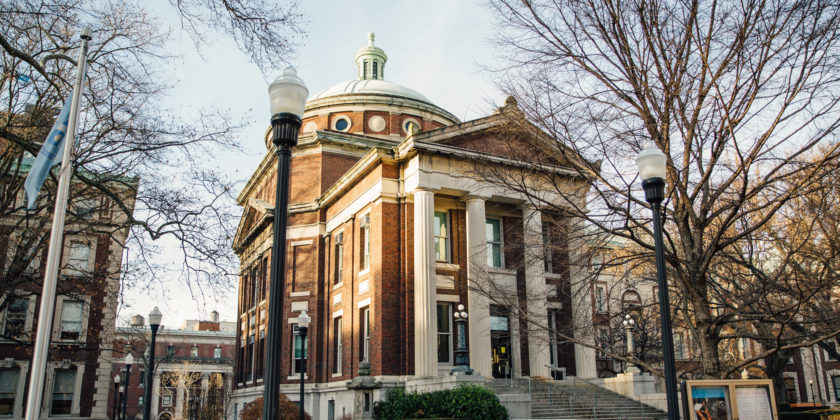
Columbia U Engineering – Summer Foundations of Research & Streetscapes (Stipend!)

Awesome programs for NYC-based students!

For six weeks, students work with Columbia Engineering researchers and participate in programming to develop their academic and professional skills. Students gain practical research experience, collaborate with research faculty, staff, and students, practice new skills, and take part in multi-level mentorship. ENG has two tracks students can apply to: Foundations of Research (FoR) or Center for Smart Streetscapes (CS3). 

Program components include experience in working on genuine engineering research projects, research skills and college prep workshops, science communications workshops, and additional supplemental seminars and opportunities. Students are provided with a stipend to support them over the summer. They encourage all rising seniors (current 11th graders) with an interest in engineering and research to apply.

The application is now open! Applicants should know that the application uses the same platform as the graduate school, so some questions may not be relevant for high school students. Those questions can be left blank.

Read more here –> https://outreach.engineering.columbia.edu/eng 

*Stay in the know! Subscribe*

Jameel Clinic AI & Health High School Summer Bootcamp

Jameel Clinic AI & Health High School Summer Bootcamp

Fantastic opportunity at MIT; application is now open!

More info….

We’re pleased to share that the application portal for the Jameel Clinic AI & Health High School Summer Bootcamp is officially open! As technology continues to accelerate and shape society, we believe it’s critical to equip students with the knowledge to understand some of the biggest challenges facing humanity today. In this rigorous, one-week program, students will have the chance to learn from and meet faculty from MIT and Harvard Medical School while contributing to a final project that will hone their research capabilities in AI and health.

Our bootcamp is designed to bring the “MIT experience” to students, whether it’s Nobel Prize winners or quadruped robots. This program introduces students to transformative ideas from world-class faculty, clinicians, and industry pioneers, helping the next generation of thinkers identify and understand where the real risks and opportunities are when it comes to bringing the power of AI into human health.

Learn more here –> https://jclinic.mit.edu/events/high-school-summer-bootcamp/

*Stay in the know! Subscribe*

Resume Magic

Resume Magic

What selective colleges look for in applicants is fairly well known. Academic excellence in your school’s most rigorous classes is a start, as are competitive test scores. But many applicants overlook the magic that happens when what excites you in the classroom begins to show up in what you do outside of it. This is how you demonstrate that you have a curious mind, some intellectual spark. As Michigan says, “Show us how the combination of coursework and related activities inspired original thinking on your part.” These connections light up the eyes of AdComs at the most selective colleges.
 
I also want to point out something Princeton says that really highlights why your resume matters so much in this process, as they seek to “understand your potential to take advantage of the resources at Princeton and the kind of contribution you would make to the Princeton community.” What you do in high school foreshadows what you might do in college. When you look at your resume, is that picture clear, and does it include academics? College is school, after all…. 
 
You don’t need to be applying to Princeton, Yale, or Michigan to benefit from this advice: 
 

Yale podcast/blog: https://admission.princeton.edu/blogs/testing-rigor-ai-and-what-are-we-really-looking-your-questions-answered-dean-richardson

Michigan’s application instructions: https://admissions.umich.edu/apply/first-year-applicants/selection-process

Princeton’s helpful tips: https://admission.princeton.edu/apply/before-you-apply/helpful-tips

 
*Stay in the know! Subscribe*
Final Call for Inspiring Girls* Expeditions 2025 Applications!

Final Call for Inspiring Girls* Expeditions 2025 Applications!

🚨 DEADLINE TODAY!

Applications for Girls* on Ice Canada are due tonight at 11:59pm PST!

📅 Upcoming deadlines for the rest of our expeditions are:

        February 9th for Girls* in Icy Fjords and Girls* on Rock (in two days!)
        February 14th for Girls* on Ice Schweiz, Girls* on Ice Suisse, and Girls* on Ice Austria
        March 2nd for Girls* on Ice Alaska and Girls* on Water

Share this with teachers, parents, and students who might be interested! Appy here. 

*Stay in the know! Subscribe*

Course Planning: All Five Cores, All Four Years!

Course Planning: All Five Cores, All Four Years!

Colleges have long-loved students who take English, Math, Social Studies, Science, and Language every year of high school. It’s my most despised suggestion so I’m sharing College MatchPoint’s blog as backup. I do believe there are exceptions depending on the student, their school goals, major, the selectivity of their list, and where they go to high school, but either way, read more here!

*Stay in the know! Subscribe*


New UC data dashboard sheds light on admissions for each academic discipline

New UC data dashboard sheds light on admissions for each academic discipline

This is very cool! 

From the University of California:

Our researchers collect and analyze all kinds of information about the world. We also track all kinds of UC stats, many of them available on detailed public dashboards in the online UC Information Center.

This fall, UC published a new data dashboard that shows how many first-year students apply to and are admitted at each campus by academic discipline. Until now, UC published the overall first-year admission rates for each campus. The new dashboard expands that by providing additional detail on admissions by academic discipline. For each broad area of study, you can see the admit rate, along with how many students applied, were admitted and ended up enrolling. The dashboard lets you see the admission rate for a discipline versus the overall campus admission rate. You can look at just one campus, or you can compare disciplines across UC’s nine undergraduate campuses. (A separate dashboard shows transfer admission rates by major.)

The goal of the dashboard is to offer the public more transparency into UC admissions. Being able to compare the selectivity of disciplines and campuses gives applicants an additional piece of information in their process and a more refined understanding of the competition. That said, the dashboard shouldn’t be used to assess any particular student’s chances of admission.

Continue reading about the new data dashboard in this October 18 article and explore the dashboard yourself.

*Stay in the know! Subscribe*

Insights on Test Optional Admissions

Insights on Test Optional Admissions

In an op-ed published in Inside Higher Ed, David Blobaum, the director of outreach for the National Test Prep Association and the co-founder of tutoring company Summit Prep, argues that it is in college hopefuls’ best interests to submit test scores, even if a school does not require them.

When accepting – or rejecting – applicants, admissions departments cite often-clandestine “institutional priorities” having to do with students’ backgrounds or areas of expertise. According to Mr. Blobaum, however, “Rhetoric and reality often diverge.”

He contends, unequivocally, that “test-optional institutions have a preference for students with high test scores” and that students applying to test-optional colleges and universities are less likely to be admitted if they do not submit test scores. “If a college does not value SAT or ACT scores, then the college would not use those scores.”

Citing data from Dartmouth’s watershed report, which led the institution to return to test-mandatory admissions, Mr. Blobaum argues that traditionally marginalized students have the most to gain from submitting test scores: “a disadvantaged student with an SAT score between 1450 and 1490 is 3.7 times more likely to get admitted if they submit their score than if they withhold it.”

To support his argument, Mr. Blobaum explores a few key examples of elite institutions that recently were or currently are test-optional:

  • Yale had a three times higher admit rate (6 percent vs. 2 percent) for students who submitted test scores over the past several years compared to those who didn’t.
  • According to Cornell’s internal research, “submitting test scores significantly increases the likelihood of admission (to its) test-optional colleges.” The institution labeled it “prudent” for students to include test scores with their application package.
  • Even though Duke claims that choosing not to submit SAT or ACT scores “will not impact (a student’s) admissions decision,” 81 percent of newly enrolled students at Duke submitted some combination of SAT and ACT. Furthermore, Duke’s admission website goes as far as advising students to “buy a study guide and begin taking practice SAT or ACT tests.”

These examples are compelling, and make clear that standardized test scores can certainly act as key differentiators between candidates who are otherwise qualified for limited class seats. These differentiators are particularly important for hyper-selective schools where the ratio between applicants and enrollment offers is especially stark.

Mr. Blobaum approached this topic with an eye toward the most elite institutions; his observations, therefore, despite their potential relevance at Ivy Plus schools, may not capture the admissions landscape at less selective—but still excellent—colleges and universities. Furthermore, Mr. Blobaum’s argument sometimes strays from hard data; he, perhaps controversially, claims that admissions departments “often outright lie” and bases some of his reasoning on the fact that “it is just common sense.”

Source: Denied? That Top College Lied (Inside Higher Ed)

*Stay in the know! Subscribe


Registration for the 2024-2025 Wharton Global High School Investment Competition is now open!

Registration for the 2024-2025 Wharton Global High School Investment Competition is now open!

Don’t miss your chance to compete in the Wharton Global High School Investment Competition.

Important details, dates, as well as helpful resources and tools can be found here: https://globalyouth.wharton.upenn.edu/investment-competition/

The competition is a free, English-based, experiential investment challenge for high school students and teachers that includes an online trading simulator. Participants compete with other students from around the world and learn about finance, teamwork, strategy building, analysis, communication, and the stock market.

*Stay in the know! Subscribe*


Colleges That Are No Longer Test Optional – Updated 4/23

Colleges That Are No Longer Test Optional – Updated 4/23

Colleges have continued to roll back test-optional policies. We will update this post as more updates are made.

You’ll need competitive test scores to apply to the following schools:

Auburn (testing STRONGLY preferred; required with certain GPA)
Brown
Cal Tech
Cornell (2026, require, 2025 recommended for certain colleges)
Dartmouth
Georgetown
Georgia Tech
Harvard
MIT
Purdue
University of Georgia
University of Florida (state-wide)
University of Tennessee (state-wide)
UT Austin
Yale

We have also found it beneficial to send high scores to most other test-optional schools in the top tier, especially if you are applying to a selective major (engineering, comp sci, data science, business, hard sciences) or attend a high school where the majority of students test and test well:

Ivies
Stanford
Vanderbilt
Northwestern
JHU
Duke
Rice
WashU
Notre Dame
Carnegie Mellon
Tufts
Emory
USC
Boston College
Boston University (exception: General Studies)
NYU
Clemson
Case Western
Villanova
University of Chicago
University of Michigan
University of Wisconsin
University of Virginia
University of North Carolina
University of Illinois
University of Maryland

Reach out to us if you’d like help with your application strategy and deciding whether you are a good candidate to apply test-optional or not.

*Stay in the know! Subscribe