How the Harvard Case Highlights What All College Applicants Need to Know

Each summer, Harvard’s Admissions Office profiles a handful of previous applicants in a “casebook” and distributes it to employees. The book is meant to teach staffers how to evaluate candidates. For each applicant, the document details the bullet-pointed factors that rendered the applicant “appealing” and the traits that gave Harvard “pause.” It also provides the outcome for each student.

A recent Crimson article shines a light on some of what came from the casework exploration, none of which comes as much of a surprise to someone in my role. I want to share some of what the Crimson article highlights, but also point out that these findings are not solely applicable to Harvard applicants. Any student applying to a selective college or university should consider these findings because they hold true across many schools.

A clear and impressive academic performance and talent: 

“But stories of successful applicants prove a common truth: Harvard admissions officers are looking for academic superstars who have overcome adversity in their personal lives* and can offer a clear vision of what they would accomplish in Cambridge.

Smarts reigned supreme. In nine of the 11 cases, admissions officers pointed to strong academic performance as a compelling reason for admission. The word “bright” appears eight times in the document.”

*Overcoming adversity plays out in so many different ways. Many applicants have not experienced hardships related to their living conditions, family finances, etc.—but no one’s life is perfect. Everyone has experienced personal failure and moments of weakness and vulnerability. A student’s willingness to dig deep and have the confidence to present these moments is one way to overcome the “hardship” gap if they have not navigated a more traditional hardship.

An extracurricular “niche” (which could be related to the academic narrative):

“While a strong overall candidate, Evelyn [Satmar]’s credentials are not unusual in our applicant pool,” the document reads.

Admissions officers also took note of activities outside the classroom. Reviewers mentioned that at least three candidates failed to find an “extracurricular niche” in high school.

“While the package is appealing, the case lacks the ‘hook’ provided by a special academic or extracurricular talent,” officers wrote of Mandisi.”

And likeability (charisma and lack of ego!):

“Grace was a “strong student” in high school, but nothing exceptional. One reviewer noted her test scores “suggest she won’t be a top engineering student at Harvard” — and predicted she “will have to work hard here.”

However…. “Grace’s teachers, guidance counselor, and alumni interviewer describe her in terms we rarely read,” the document states. “A true ‘1 personal’ — one of the few we see each year.”

And what about “pause” factors reasons—reasons to deny an application. There are plenty of those, but here are a few that are overwhelmingly true at all schools, not just Harvard:

“The document lists “pause factors” for each candidate. These more problematic traits — including less impressive grades, uninspiring extracurriculars, and excessive braggadocio — spurred lengthy deliberations in the Admissions Office, waitlist placements, and calls to a plethora of teachers and counselors.

For other applicants, admissions officers raised more personal concerns — many related to ego.”

Two candidates’ pause factors included “arrogance.” One was placed on the waitlist and never accepted; the other admitted to Harvard only “after many hours of debate.

Admissions officers particularly pondered whether high schoolers’ hubris would hurt them at Harvard — wondering whether applicants could successfully trade standout status for relative anonymity among hundreds of star students.

“What will his transition be like — from big fish in small pond to Harvard — and how will Sergei interact with roommates, classmates, and administrators?” one reviewer wrote.”

You do not need to be applying to Harvard to reap the benefits of these takeaways! We’ve been encouraging applicants to consider these things for as long as we’ve been doing this:

-Perform well in school and on standardized tests. This is the #1 factor. If you don’t have this…the rest is going to matter very little at top schools (unless you are a recruited athlete).

-Develop an academic narrative; even if you have a few interests, dive into them and go above and beyond in pursuing them. Just “doing school” is not very compelling. Get out there and do something!

-Find an extracurricular niche. It might be what you do to go above and beyond regarding your academic interests, or it might be something else completely. Either way, the most interesting candidates have a life outside of school and their excellent grades and test scores. Bonus if this niche is outside of the norm (think deck hockey or urban gardening instead of Model UN or piano).

-Lose the ego. You might be #1 in your class, have tons of leadership roles, and basically be #thebest, but that will all change in college. You are going to be the norm and you will need to adjust to that very quickly. Show some humility and foresight. Arrogance is the absolute most cringe-worthy part of so many college applications! Remove all traces of it (you might need someone to help with this).

Read the full Crimson article here.


*Stay in the know! Subscribe for news, tips, and advice*


Last Minute Tips for 11/1 College Deadlines

It is time to press submit (if you haven’t already!)! A few things to keep in mind as you finalize applications:

  • Send official standardized test scores ASAP if the schools on your list require officials. Double check score reporting policies. Some schools require that you send all of your scores and do not participate in score choice.
  • Meet with your high school counselor and have them review all of your applications before you submit. After any final changes, print all of your applications and review them the old-fashioned way (using a pen, on paper). When you press the review/submit button (on the Common App), a PDF is generated, which is very easy to print. You can also generate a PDF in the Coalition App. Printing each app is not environmentally friendly, but worth it. Don’t final review apps on a screen. Print them and read them back to front.
  • Follow up with the teachers writing your letters of recommendation and encourage them to submit their letters now. Don’t forget to say thank you!
  • If you added “Other” recommenders to your applications—for example, a coach, work supervisor, or research mentor—shoot them a friendly reminder, too.
  • Track your application status after you submit. Once your applications have been submitted, be sure to track their status online to ensure schools received all of your application materials. Follow up with your school counselor ASAP if a college is missing your transcript or a letter of recommendation. Check your JUNK/SPAM email folder regularly (daily), so you do not miss correspondence from schools.


*Stay in the know! Subscribe for news, tips, and advice*

2018-19 Merit Scholarship Deadlines

Although most regular decision deadlines are 1/1 or 1/15, to be eligible for merit scholarships, many schools require you submit your application much earlier. College Kickstart compiled a list of some of the most popular schools with early merit scholarship deadlines. A few of the schools you’ll need to submit by 12/1 include:

  • Boston University
  • Claremont McKenna
  • Clemson
  • College of Charleston
  • UConn
  • Richmond
  • USC
  • Wake Forest
  • Vanderbilt

Some schools set their merit deadline as their “early” deadline, so those are due even sooner (between 10/15 in 11/15 in many cases). Visit College Kickstart for their full list.


*Stay in the know! Subscribe for news, tips, and advice*


Colleges with Notable Admission Rate Changes for the Class of 2022

A few days ago, this post went out from a beta site by mistake! We apologize, and you can find the “real” post below.

My favorite data site (heck, one of my favorite college admissions sites generally!), College Kickstart, has compiled a list of colleges with the most notable admit rate changes. There are lots of falling admits to report, and many are at some of the most popular schools (at least among the students I work with). Many of the UC’s are represented, as well as some smaller schools like Scripps, Colgate, and Hamilton.

Review the list here!


*Stay in the know! Subscribe for news, tips, and advice*

Advice on College Essays

I received a WOW Writing Workshop email the other day with the subject Are Your Students’ College Essays Good Enough and some text that noted: As the early application deadlines approach, it can be tempting to “fix” your students’ college essays. We don’t want you to do that; it won’t help your students (and it might ruin the essays).

All I could think was wow, this is especially true as it pertains to parent edits! And counselor edits, and friend edits, and English teacher edits…

Kim Lofton’s Tips to Review College Essays is excellent (when thinking about the personal statement specifically), and I want to share a few of them:

“Begin by letting go of any preconceived notions about what makes a good essay. In fact, we suggest replacing the word “good” with the word “effective.” It’s important to let each student write their story in their own voice using their own words.

There is no rubric for an effective college essay, but the ones that stand out all share a few common features. Regardless of the prompt, they:

-Answer the question.
-Showcase a positive trait or characteristic.
-Sound like a high school student.
-Illustrate something meaningful about the student.
-Demonstrate reflection.”


*Stay in the know! Subscribe for news, tips, and advice*

Building a College List? Look Beyond Rankings

Not a news flash: Getting into the country’s most selective colleges is more fiercely competitive than ever, with many schools reporting a record number of applicants (again). To many, this news is fear-inducing. How will I (or my child) possibly get admitted to a “top” college or university? Answering how is hard. There are no silver bullets in this process, and the reality is most applicants won’t get admitted to the top-top schools. Instead of trying (too hard in many cases) to become the applicant you think one of these uber selective schools will admit, I suggest a path of far less resistance and more authenticty—a path that includes looking at colleges where you have a realistic chance of being admitted.

There are schools outside of the top 30 ranked on US News, and they are excellent. We help families find these schools, and we’ve seen that when they can think outside of the box, they end up with incredible options and look back on the process much more fondly than those that are laser-focused on the same set of schools at which the rest of the world is aiming.

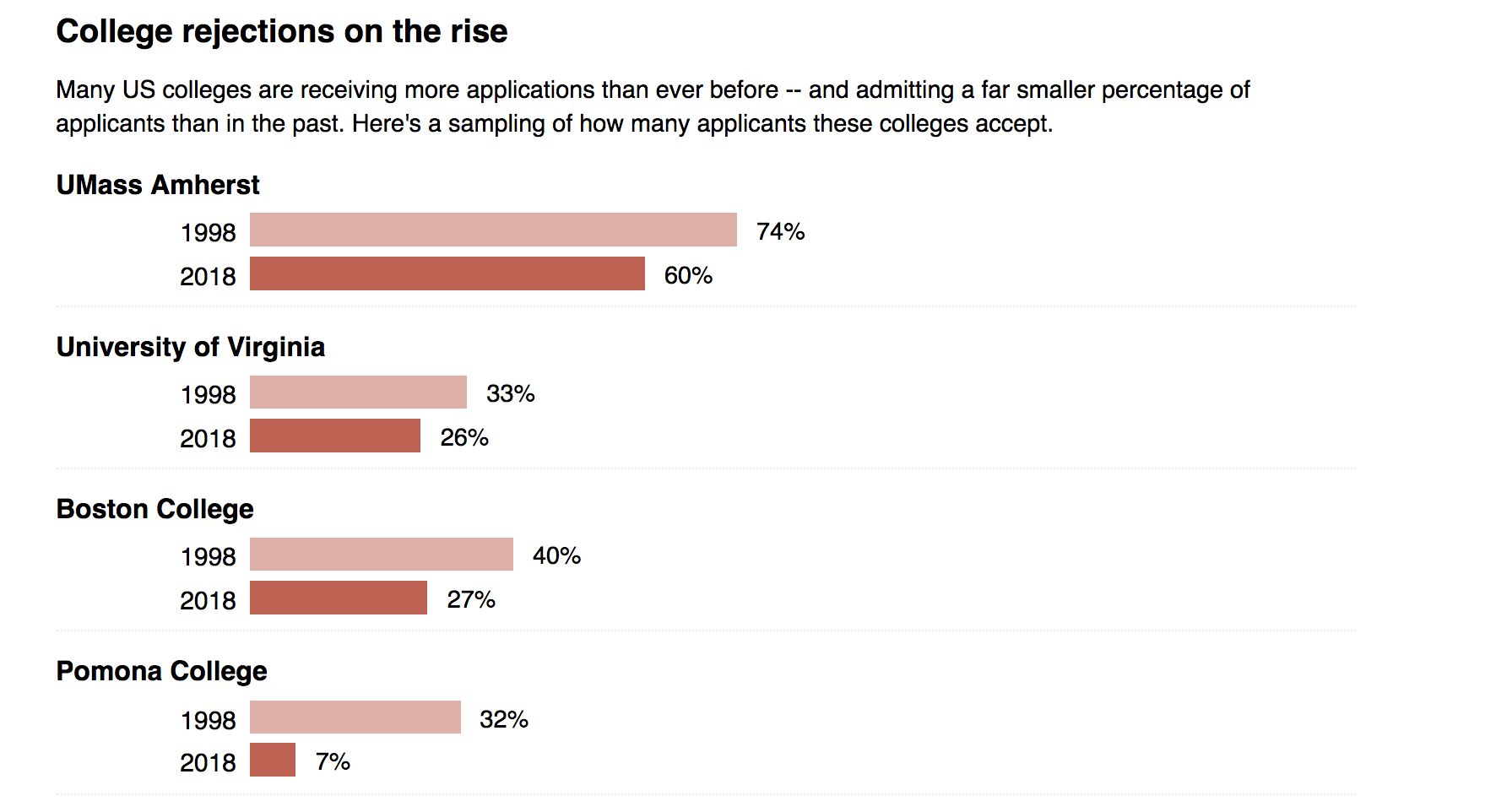
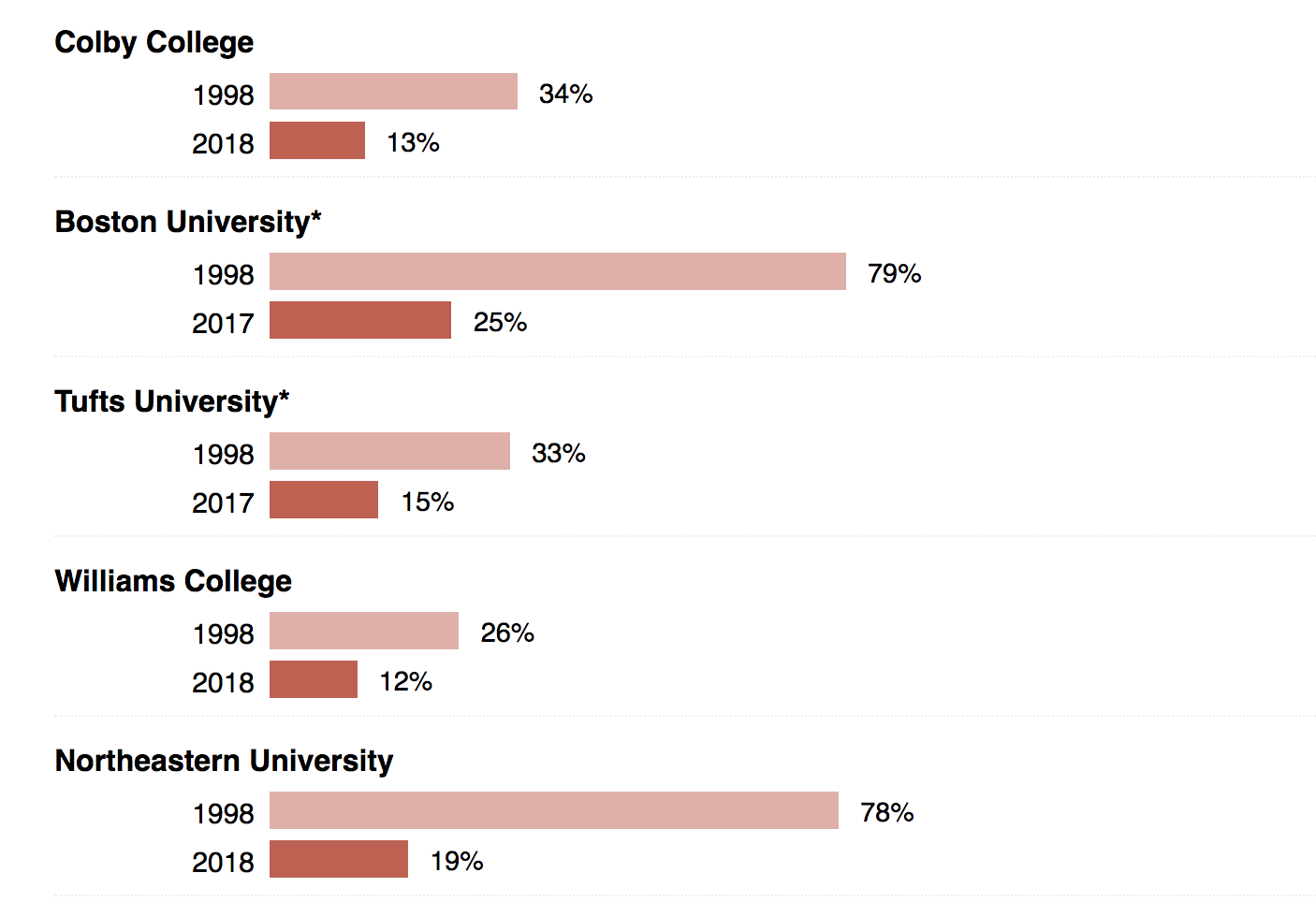
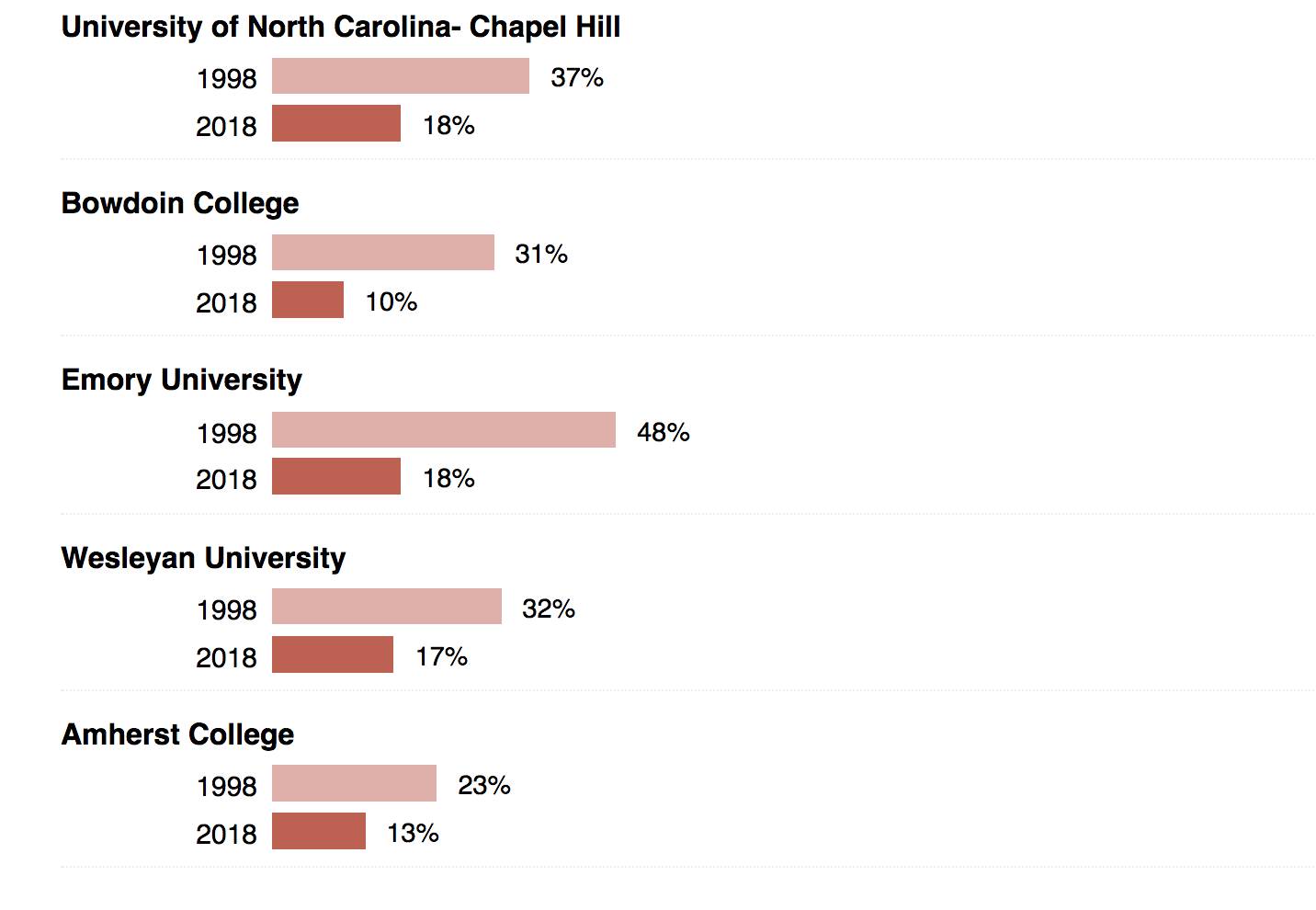
Here are some numbers from an earlier Boston Globe article noting the 20-year admit rate changes at a few of the country’s most popular schools. I’ve been saying this for a few years now, but it is time to start looking outside of the bubble of these and the other “most popular” schools, and these numbers should provide a nudge in doing so. Interested in looking into amazing schools that don’t often find themselves on the most popular list? Check out College That Change Lives as well as this list I have compiled.


*Stay in the know! Subscribe for news, tips, and advice*

Everyone Should Follow the Georgia Tech Admission Blog

I only have two or three students apply to Georgia Tech each year, and even if I have zero I will continue to read their blog. This is one of many posts that sums up why. Amazing advice if you are starting (or even right in the thick of) the college admission process. Follow this blog!

A few weeks ago, my wife called me at work around 2 p.m. This is not typical.

“Hey, what’s up?” I answered.

“Walter (our neighbor) is walking around his house with a clipboard,” she said.

“Weird.”

Not catching my sarcasm, she replied, “I know, right? Do you think they’re moving?”

“I don’t know. Maybe he has taken up sketching. I’ll see you around six.”

But like so many times before, she was exactly right. The next day there were guys pressure washing and painting. Within a week, red mulch was spread around the yard, and a bunch of boxes went out to a mobile storage unit.  Next came the “Coming Soon” sign, which a week later turned to “Just Listed.”

Since that day there have been regular showings, real estate caravans, and cars slowly cruising past the house. If you have ever sold a house, you know how all-consuming it can be. First you have to prepare to sell, which includes all the things our neighbors have been doing recently: de-cluttering inside; touching-up outside; and buying decorative items for show like doilies (things you would never actually use in day-to-day living). Once on the market, you are at the mercy of potential buyers. I distinctly remember this from a few years ago when we moved. “Someone wants to come see it at 8 a.m. on Saturday,” our real estate agent would say. We’d clean up the kids’ toys, wipe down the counters, throw about three boxes of stuff we did not have a place for into the back of the van and go eat the All-Star Breakfast at Waffle House (that part was actually okay).  “Someone wants to come at 1 p.m. on a Tuesday,” “Let’s have an open house Sunday from 1-4 p.m.,” “Look out your window. Yeah, those folks want to see it now!”

Let’s not forget you also have to move somewhere. The buying side can be worse. You download every possible real estate app: one from your realtor, not to mention Zillow, Redfin, Trulia, Falsia. Whatever you can find. You set your parameters on the number of bedrooms, bathrooms, location, price, and so on. Then the notifications start coming… or they don’t. Either way it is maddening. If you are moving locally, every trip to the grocery store becomes a detour “just to see if anything has popped up” (as if your realtor’s search would not have caught that). You become the one that is manic about getting in to see houses before other potential buyers. You are the one in the driveway asking to “see it now!”

Conversations over meals are about houses and prices and what else might come up next week. Everyone in the family (even ones who are not going to live there and don’t even visit regularly) have an opinion about how you’ve priced your house and what you need in the next home.

We’re Moving!

If you are a high school senior, all of this may sound familiar. Every time you get home there is another glossy, shiny brochure telling you with a $75 fee and a few essays you might be able to move in for four years. You have also been “caravanning” around to colleges and creating pro/con lists about size, price, location, and other factors. Like the real estate apps and websites, I’m guessing you also have found conflicting information and question the accuracy or relevance of data like test score ranges and admit rates. Everyone from coaches to aunts to random baristas are asking you questions and expressing their opinions about which place you should choose, what schools are overpriced, or which ones are unwarranted in their popularity. It’s uncertain and protracted. Let’s face it, as humans we just hate the waiting. For too many students and families the college admission experience, like the home buying and selling process, can be exhausting, maddening, and not a lot of fun.

I’m here to tell you there is a better way. You have a choice. Since I was recently trying to teach my kids the concept of alliteration, I present to you “The Three T’s.”

1 – Time. It is incredibly easy to let the college conversation permeate life, especially as a high school senior. Where are you applying? Did you write your essay yet? Aren’t we visiting Northwestern next month? When is that financial aid deadline? Did you see that brochure from U Conn? Left unchecked these queries and conversations are like incessant Zillow notifications: after practice; on the way home from school; during breakfast, or when you are just sitting on the porch trying to relax.

I propose you and your family allocate just three hours a week to college applications and discussions. Sunday afternoons from 2-5 p.m., Thursday nights from 6-9 p.m. Find a time that works. You do you (Southern Translation: Y’all do y’all). Protect your time, and protect your sanity.

Here is how this works:

PARENTS: This is your time to bring the brochures you’ve noticed in the mail and say, “Hey, look honey, the leaves are turning in South Bend. Isn’t it pretty?” You get to ask, “Have you written your supplemental essays for SMU?” Or “Do you still want to take that trip to California to look at schools in November?” It’s all fair game.

Outside of that time, college talk is banned.  Drive past a car with a University of Colorado sticker? Not a peep. Sean next door gets accepted to Auburn or Washington State? Mute button is on.

STUDENTS: You don’t get to bring your cell phone, crunchy snacks, or a bad attitude. Three hours a week. You come ready to string multi-syllabic words together and use intonation. No shoe gazing. You are committed to being fully engaged in the conversation because it’s the ONLY ONE! One time a week… only three hours (1/8 of one day). You got this!

Three hours a week is also plenty of time to get college applications done (just not the last three hours before the deadline!). If you use three good hours for several weeks, you can absolutely do a great job and in truth, your essays will be better having re-visited them in multiple sittings. There is a lot to say for letting something sit for a week and then coming back to it with fresh eyes, some sleep, and a new perspective.

Note to students: I know sometimes your parents’ questions and opinions can sound like nagging or overreach. See that for what it really is—love and deep affection in disguise. The thought of you heading to college brings a crazy mixture of emotions, and frankly sometimes they are still trying to reconcile you are taking AP Biology or standing at over 6 feet tall. Somehow, carpool lines and tricycles do not seem like that long ago. Give them a break. Fear, excitement, love—these all warrant your being fully engaged. Three hours is less than 1.8% of your week. Phone down. Answer their questions—and every now and then, how about a hug?

2 – Talk. One of the main issues with home buying and selling is how public it becomes. Everyone can see pictures, prices, statistics about square footage, and the number of bathrooms on flyers and online. Neighbors are chatting in the streets about why someone is moving, when the house will sell, who might move in, and if it is over or under priced. After the sale is finalized, that too is public information—setting off another wave of gossip. That type of unnecessary, unhealthy, and unbridled noise can also occur in your admission experience if you share too much publicly. I strongly encourage you to consider how much you are going to volunteer with friends and online about where you are applying, because that opens you up to questions later about whether you are admitted, deferred, denied, or waitlisted.

Students, consider holding this process a little closer to your vest (or sweater or shirt for non-vest wearers) and only letting in a very small subset of trusted people. Parents, commit (before any admission decisions are released!) to not adding to the speculation and consternation surrounding college admission by sharing stories at parties or games or online about where your son or daughter is admitted, denied, or offered scholarships. Keeping decisions and deliberations private has incredible potential to build trust and bond your family in what should be a very personal process.  Taking this a step further, do not ask others about their college admission decisions. Not only is it really none of your business, but typically the information shared is exaggerated or inaccurate. Sorry, but sometimes… people, you know?

3 – Trust. Paranoia often surrounds buying and selling a house making it even more all–consuming. We are not going to be able to sell our house for the amount we want. I just know we are going to get outbid. There are almost no houses for sale and lots of people buying in that neighborhood. All of this, again, is extremely similar to college admission. There are thousands of applicants for a limited number of seats in classes. You apply (make an offer) and then have to wait anxiously to see if you are going to be admitted (offer accepted). With tens of thousands of dollars involved and a potential move out-of-state, it’s expensive and emotional.

I am asking—scratch that—I am telling you this is all going to work out. How do I know? Last Sunday, we hosted a program at Tech called Give 1 Get 1. Before Convocation, students brought shirts from other colleges where they visited, applied, or were admitted. That day we got lots of different shirts, saw lots of different faces, and heard lots of different backgrounds and stories about how they arrived at Tech. They were bonded by one commonality—they were all excited to be on campus and get started with their college career. This is the beautiful and inevitable other side  I described a few weeks ago.

Trifecta: Combining the 3 T’s

Anyone who has bought or sold a house has had some disappointments and made some adjustments during the process. With so many variables in timing, pricing, and other buyers and sellers, things never go exactly as you hope or plan. But they will also tell you that a house becomes a home because you move into it. You make it yours.

The truth is there are lots of great colleges in the nation where you could move in, succeed, and be thrilled with the community—where you could make friends, do well, be happy, and thrive. Right now these places are just names and addresses—don’t place any more emotional attachment on any one of them than that. Talk to friends this year when they come back from college for Thanksgiving or Winter Break. Ask them where they thought they would be a year prior—for many their current school was not their first choice or even on their radar. But then they moved in. They made it their home. And so will you.

Time, Talk, Trust. Apply these well and behold the power of alliteration, my friends!

If you would like to subscribe to receive blog entries when they post, please enter your email address above, or click the “Subscribe” button in the header at the top of this page. We also welcome comments or feedback @gtadmission on Twitter.

Colleges that Allow Self-Reporting of SAT and ACT Scores

Applying to college is expensive! There’s application fees, test registration fees, and official score reporting fees. Many students are eligible to have these fees waived, but most students don’t qualify for waivers.

Colleges in the list below compiled by Compass have stipulated that students may self-report their test scores in their applications. Click on the name of the college to visit the page on their website where the policy is explained. Note: only colleges that have written policies on their websites or application materials are included here.

*Will not accept self-reported scores, but publicly states that they will accept scores submitted by the high school counselor as “official.”

Please note: All colleges require official test scores upon enrollment; these are application policies only. Students should check directly with each college to confirm they have the most recent and accurate policy information.

Source: Compass


*Stay in the know! Subscribe for news, tips, and advice*

The Long Game

Reposting this awesome blog from Senior Assistant Director of Admission at Georgia Tech, Katie Mattli. If you think GT might be on your list, or even if it is not, this is a fun blog to read!

Read the original post here!

I like quirky historical novelties and the Livermore Light Bulb, or known to its friends as the Centennial Bulb, is one of my favorites.  Never heard of it?  Let me explain.  Yes, there is indeed a light bulb in Livermore, California so famous it has a name and actual caretakers.  Why? Because the Livermore Light Bulb has been softly glowing in the Pleasanton Fire Department for 117 years! In fact, it just had a birthday in June. The Centennial Bulb has a website, a festival, a children’s book, and –this is my favorite part – its own Bulb Cam. You can literally watch a light bulb glow in real-time, which I find humorously whimsical.

What does a light bulb have to do with college admission?  A few things actually.

Don’t second guess your interests. 

I mean it.  Live them loud and proud.  I’m writing about a light bulb I like and you are still here, so that proves authenticity is interesting.  The applicants who get my attention in the admission process are those who, for lack of a better phrase, really like stuff.  All kinds of stuff.  They hear about a cause, read about a historical event, or learn about a theory and they dive in for the pure pleasure of learning more about it.  You can sense joy in their application—joy in sharing something that really engages them. Students always ask, “How can I make my application stand out?” Follow your true-North passions and your application will naturally have a strong voice in the crowd.

Care Instructions

The Centennial has been glowing for so long because no one remembered to turn it off – for a long time. It turns out that switching lights on and off all the time actually reduces their shelf life.  It makes me wonder how often we, students and adults alike, take stock of what is healthy for us. We don’t have care instructions attached to our lives, but if asked we could probably name the basics.  We are the opposite of lightbulbs.  We can, and should, turn off to recharge. You should sleep.  You should eat.  You should spend time with friends.  Do you live by your calendar? Then put your self-care appointments on the docket with reminders such as “lunch,” “snack,” “aspirational bedtime,” and “breathing room/free time.”  A healthy student will thrive in high school and in college. I haven’t made any clichéd references to lightbulbs and burn out here, but you get the picture. Don’t get so caught up in the everyday noise that you forget to be healthy.

Who is on your maintenance team?

The Centennial Lightbulb has three different organizations devoted to keeping that little four-watt light bulb softly glowing.  Before you start the college admission process, take stock of who is in your corner.  Who are the folks in your inner circle?  Choose carefully.  Do they see your value? Do they give you honest feedback?  Do they encourage you? Do they keep you anchored? The vast majority of students headed to college had help along the way.  Family members are not the only people who hopefully have your back. Don’t forget you can create a supportive network staring with a favorite teacher, a retired neighbor, a high school guidance counselor, your coach, a friend who graduated last year.  Reach out, ask for some time, make an appointment, start a conversation. It takes a village.

Keep your eye on the long game.

Physicists have studied the Centennial and have discovered its filament is thicker than today’s commercial lightbulbs.  It is made of sterner stuff. The college admission process can rattle highschool students. I think students believe they are focusing on their future (hence the anxiety), but I think they have lost sight of the long game.  After years of watching students and their families navigate applying to college, here are my thoughts on the admission long game and students who are made of “sterner stuff”:

  • Finding a good fit is the ultimate goal.  Your best-fit school may not be your best friend’s best-fit school.  Get comfortable with that. Put institutions on your list where you will thrive. That is the long game.
  • Ignore the myth of “the one.” college will not be the making of you but your decisions in college will. That is the long game.
  • Be happy for others.  Time will prove to you that what feels like a competition now dissipates with age.  If your buddy gets that coveted acceptance or the Val or Sal spot, cheer for them. It shows character and you will be happier for it. That is the long game.
  • Enjoy senior year.  This is your last homecoming, last high school debate competition, last playoff, senior night… Enjoy them!  That is the long game.


*Stay in the know! Subscribe for news, tips, and advice*

Do Perfect Students Have Nothing Interesting to Write About?

I am especially fond of Janine Robinson’s many posts on writing anecdotes. This month I am “final reviewing” many personal statements. In doing so, I’ve been thinking a lot about topic generation and how to get students to dig deeper to find topics that I have not read a hundred times before. It always bothers me when parents complain that we took a few hours to brainstorm topics; I’m not sure they understand that pinpointing a decent topic can take a lot of work. It is disheartening that so much digging needs to take place at all, but it often does. Anyway, Robinson’s blog post on essay topics has some interesting points, so thought I would share.

From what I’ve seen working with college-bound students for the last decade, many of our most talented, driven and intelligent teenagers are living such parallel, over-achieving lives that they struggle to find an effective essay topic. These are the same kids, many targeting Ivy League educations, who will need bull’s-eye essays to have even a shot of getting in.

It’s sad, unfair and ironic: The hardest working students have no time for a life. Here’s an example of a student I worked with recently:

The mom sent me an email summarizing her daughter’s background:

The daughter was interested in history and computer science, and also in theater (worked on every school production since 7th grade). She also did Model UN (with accolades); was editor of the school newspaper and active in debate club. Also, she was captain of the robotics team, the chess club and some other academic team. She had built her own computer and the family’s home service. She also participated in three varsity sports. The daughter’s GPA was stellar and test scores excellent.

Where did she want to go to college?

“Her high school counselor thinks she has a good chance at the Ivies,” mom wrote.

Sure sounds like this girl could have her pick of colleges, right? Good luck with that!

Acceptance rates at the prestige schools are at all-time lows. Even if she wrote an outstanding college application essay, her chances would be slim to none at the most elite schools. The real problem, to me, is that this student isn’t unusual.

Most of these applicants have similar off-the-charts grades, test scores and extracurricular dossiers. With everyone at the top of the heap, the focus often turns to their college application essays. The tragedy I mentioned in my sensational headline is that these are the exact brilliant students who have the hardest time coming up with an interesting and meaningful essay topic.

Why?

They are too busy doing the same things. Team sports, band, drama, clubs, and internships. Model United Nations. Summer camp. Mission trips. Robotic competitions. And mostly…studying.

Even though their activities and experiences are truly character-building and lesson-teaching, the highly orchestrated nature makes them difficult to mine for gritty, organic or relevant life-shaping lessons. That’s why one of my first questions to students I tutor is whether they had held a job. Summer jobs. Working part-time during school. Even hourly work. These are a gold mine for topic ideas, mainly because they fall outside that high school student bubble where everyone does the same thing. Suddenly a student has to deal with getting stiffed by a customer at a restaurant where he waits tables. Or a student has to find a way to get his lawn mower to job sites without a car. Maybe a student gets passed over to caddie at a golf club because she’s Hispanic.

I advise students to recall “times” they faced problems in their past to discover real-life moments that helped shaped their thinking in some way. If they can show themselves in action handling that issue, their stories (and essay topic) will reveal a piece of their unique personality. If they also reflect and explain what they learned when handling that problem, they also can reveal their character.

Personality + Character = Awesome Personal Statement Essay

The sad thing is that the most high-reaching students often have not had a summer job. Not only have they not had time in their activity-packed lives to hold a job working at Subway, or a clothing boutique or for their parent’s grocery store, but they simply don’t have ANY FREE TIME. Many of these students are distressed when we start brainstorming an essay topic. They say the same things as all students–“There’s nothing interesting about me.” I ask them what they do when they do get a rare moment of time to themselves.

They pause.

Think.

Think some more.

“I like to hang out with my friends,” many tell me. Oh yea. Friends. How sad is this??

Unfortunately, hanging with friends doesn’t often yield great essay topics, so we keep fishing around in their past to find something they have done where there weren’t a lot of adults around making sure nothing went wrong.

Perfect life. Nothing happens. No story. No story. Dull essay. Talk about pressure!

These students have worked so hard, for so long, and truly sacrificed a lot to be perfect students, the exact kind who should get into the most competitive college and universities. I believe many should simply let go of the Ivy League fantasy and focus on the several hundred or more outstanding educational institutions that don’t have Ivy status. Boy, would that chill out this frenzied application world almost overnight. I believe the kids would let them go without a second thought if their parents went first. I know I’m old school, but I have to note that many of my achieving students also mention “My anxiety” or “My depression” as possible essay topics.

I don’t think that’s just a coincidence.

I remember one student who was so desperate for an interesting experience that he planned to borrow an experience that happened to his mother when she was young. And guess who’s brilliant idea this was? Yup, mom’s. But for many of these perfect students, who have engaged in more interesting and challenging activities than many people do in a lifetime, they can’t find that magic topic or everyday experience to nail their college application essay.

It’s the overachievers who come from privileged backgrounds who have it the hardest. Somehow these students do have time for international vacations, second home visits, ski trips, spa outings, sailing, riding horses and golfing (I’m not trying to be snide; this is what they tell me). It’s possible to extract interesting experiences and write compelling essays that involve these privileged activities, but I haven’t seen many. Students who have had to step in to help their family or their own financial well-being are the lucky ones—at least when it comes to essay topics.

If they lived on a ranch in the middle of nowhere and helped raise the pigs.

If they helped their mom clean houses on weekends.

If they ran the cash register at the family laundry mat.

If they had to get a summer job to earn spending money (HINT: That could be any kid.)

Perfect Students: Dig Harder for Your Essay Topic

This is where “real-life” happens, and no matter how hard you try, it’s much easier to write about, extract relatable experiences and moments, and draw out life lessons when life involves a degree of struggle. I feel for these overachievers. They are hard-working, well-intentioned and great kids. For some, this may be their first taste of how life can sometimes be unfair. Don’t despair, though, if you are a perfect student who has done all the right things, plus some. You will still get into the most awesome schools.

When it comes to your college application essay, and finding a killer essay topic, you are going to have to once again be that kid who goes the extra mile. You can and will find great topics. They will just take more digging and imagination, possibly more research and self-reflection. I push the idea of the “mundane,” over the impressive. Works every time.

Even if you are one of those determined students who does everything, along with thousands of others doing the exact same thing, you are unique. You just need to work hard to find some type of problem (challenge, obstacle, failure, phobia, conflict, set-back, crisis, mistake, etc.) you faced in order to show how.


*Stay in the know! Subscribe for news, tips, and advice*